Voice of reason
5th anniversary of the murder of Lebanese political activist Lokman Slim

He was considered fearless. With words and cultural activism, he fought against sectarian violence, for a democratic and secular Lebanon. This made him powerful enemies in his homeland. On February 3, 2021, Lokman Slim was shot dead.
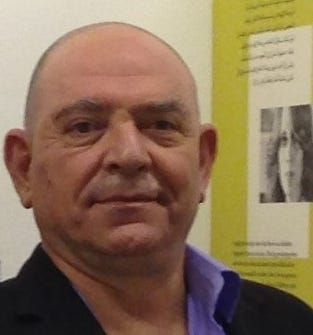
This text should have been published a month ago, and I apologize for the delay. The protagonist deserves to be remembered in every respect, even outside of anniversaries.
Especially since the current attack by Israel and the United States on Iran once again makes it abundantly clear what a minefield the Middle East is. Not only between states. All those who dare to denounce the powerful in the region have one foot in the grave.
Lebanese publisher, filmmaker, journalist, and activist Lokman Slim was one of those brave souls. Among other things, he spoke out against Hezbollah, which is supported by Iran.
On the fifth anniversary of Lokman Slim’s death, a photo exhibition opened at the Union Marks cocktail bar in Beirut. The exhibition is entitled “REMAINING.” It features photos by journalist Edouard Alias commemorating the twenty people who were murdered for political reasons in Lebanon between 2004 and 2025.
Lokman’s widow, German documentary filmmaker Monika Borgmann, read out their names at the opening. She emphasized how important remembrance is as a prerequisite for fair reappraisal and legal resolution.
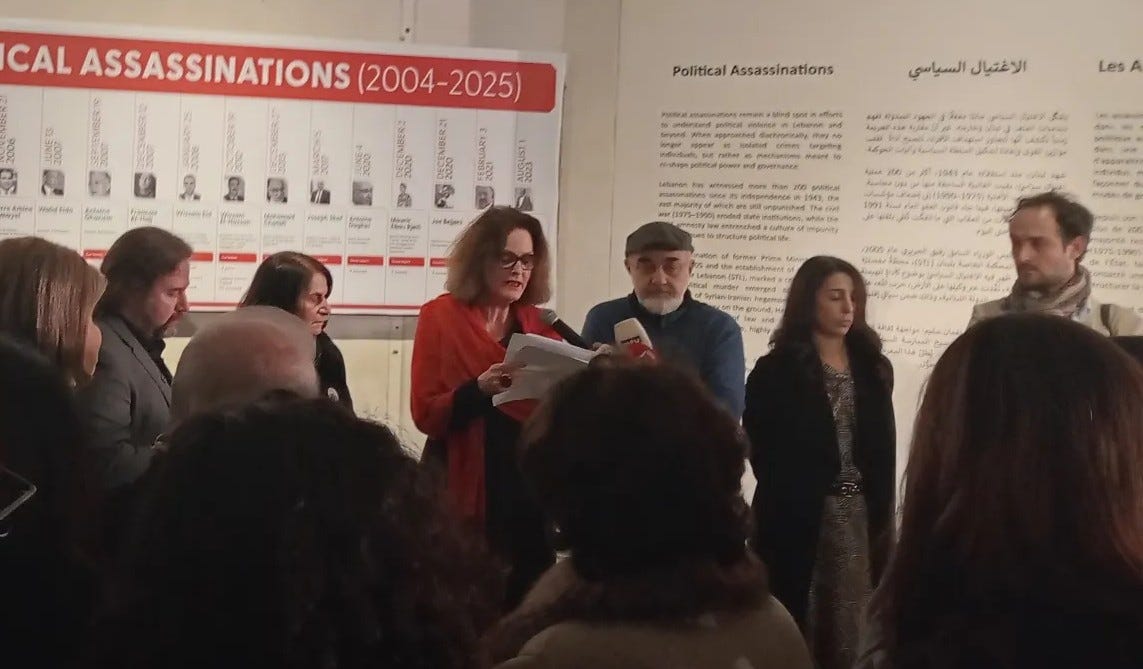
A video played on a continuous loop on the wall, showing the recovery of the many bodies and injured victims of the car bomb attack on Rafik Harriri on February 14, 2005. The businessman was the first prime minister after the end of the Lebanese civil war. The Special Tribunal for Lebanon later determined that members of the Shiite Hezbollah were responsible for the attack on the Sunni Muslim.
“Just seeing these images causes emotional and physical pain,” comments retired pastor Renate Ellmenreich from Nuremberg, who has been working in the Protestant Community in Beirut for two years. Coming to terms with history, especially the civil war, is a huge issue in the country and very difficult to deal with. “It seems even more difficult to prosecute those legally responsible – whether for the civil war or the many disasters that have afflicted the country – the explosion in the port, the banking crash.”
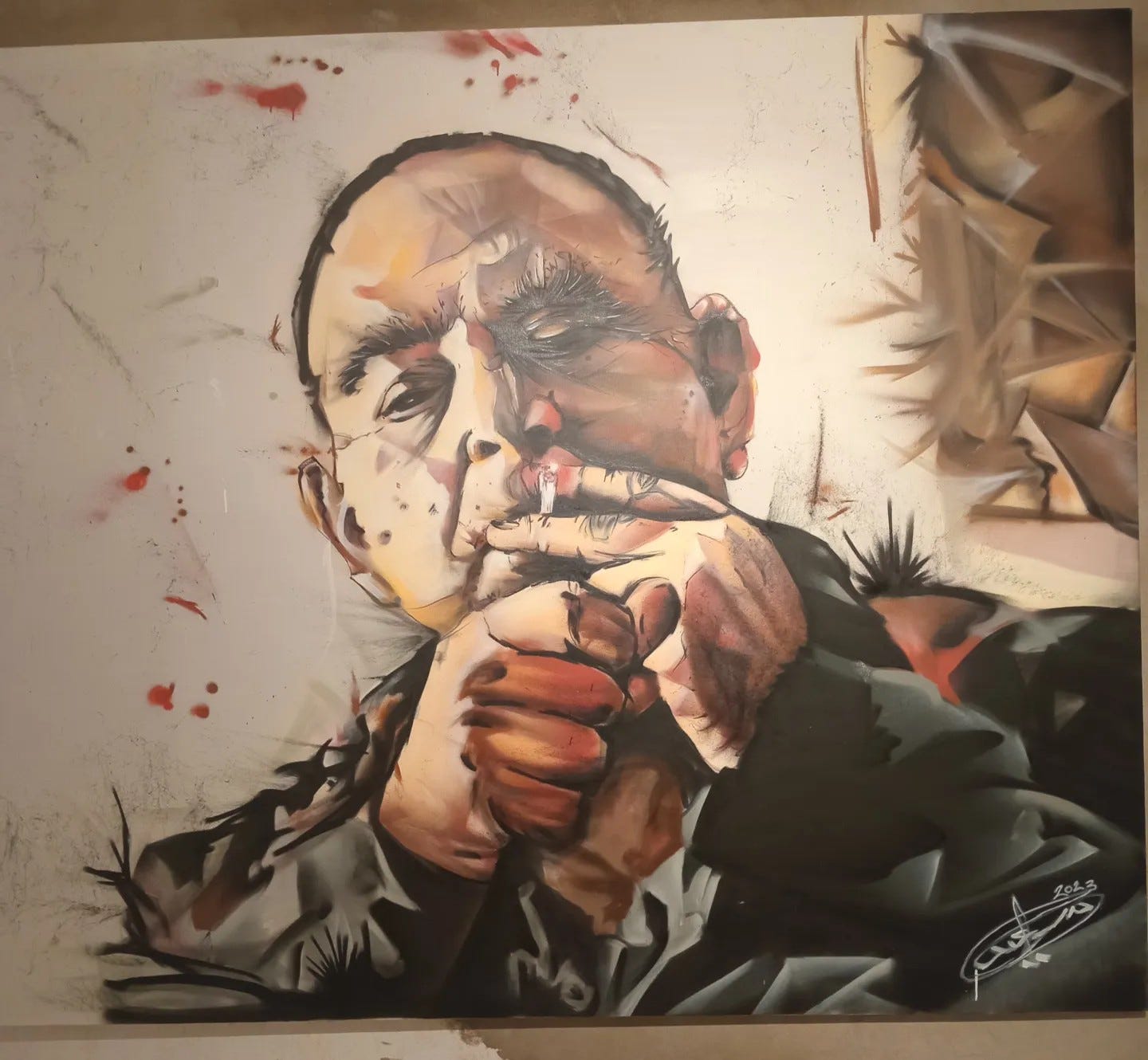
Lokman Slim, born Luqman Selim in Beirut on July 17, 1962, blamed the sectarian division of the country for the civil war (1975-1990). He himself came from a long-established Shiite family in southern Beirut that maintained close ties with the country’s Christian elites. His father was a lawyer, landowner, and member of parliament, while his mother was a Christian from Egypt.
In 1982, Lokman went to Paris to study philosophy at the Sorbonne. After returning, he and his wife Monika Borgmann founded the UMAM Documentation and Research Center to preserve the history of the Lebanese civil war—in the Haret Hreik district, of all places. This was where Slim was born and now lived in the family estate – in the heart of the stronghold of Hezbollah, which he had repeatedly denounced. During the 2006 “Lebanon War” between Hezbollah and Israel, the archive and Slim’s house were largely destroyed in an Israeli air strike. The archive was then moved online. In the “hangar” next door, a former warehouse for fruit and vegetables, Slim and Borgmann set up a cultural center for art exhibitions and film screenings.
When Slim joined the popular uprising and the demand for foreign policy neutrality in October 2019, he made Hezbollah his enemy once and for all. “Hezbollah supporters plastered his property wall with printed curses and threats covering several square meters, saying that it would soon be his turn to end up on the scrap heap of history,” writes Christoph Reuter in his very personal obituary in the German news magazine “Spiegel” (Mirror). Slim was nothing more than an “Israeli agent” and part of the “Zionist conspiracy,” according to the accusations.
The perpetrators of the graffiti had apparently forgotten the documentary film “Massacre,” which Slim shot with Monika Borgmann and Hermann Theißen in 2004. It deals with the three-day mass murder of Palestinian civilians in the Sabra and Shatila camps in Beirut in 1982. Six of those involved talk for the first time about what they did and how they felt about it. Their faces remain hidden in the film; you see their tattooed bodies, their hands with wedding rings holding rosaries. At the time, the men belonged to the Christian “Falangists,” a Lebanese civil war militia allied with Israel. The film was shown at festivals around the world and won an award at the 2005 Berlin Film Festival, Berlinale.
Following this article, please read the transcribed manuscript of my 2012 radio interview with Monika Borgmann about the film “Massacre” and the UMAM Documentation Center.
You can find it in a separate post.
In 2016, the couple brought together former Lebanese prisoners of the Syrian torture prison in Tadmor. This prison was active during the Syrian occupation of Lebanon after the civil war until 2001. The US website “Criminal Justice Degree Hub” listed the prison among the “10 most brutal prisons in the world.”
Slim and Borgmann first brought the years of horror back to life in a play, then in the documentary film “Tadmor,” in which eight men who had survived the ordeal reenacted the experiences of victims and guards in assigned roles. The film was awarded a Political Film Prize in Hamburg in 2016.
Shiite clerics attended one of the first screenings in Beirut, dressed in full regalia with turbans and robes, writes Christoph Richter in SPIEGEL. In doing so, they publicly signaled that not all Shiites and their religious establishment were supporters of Hezbollah and the Amal Party, which is also Shiite.
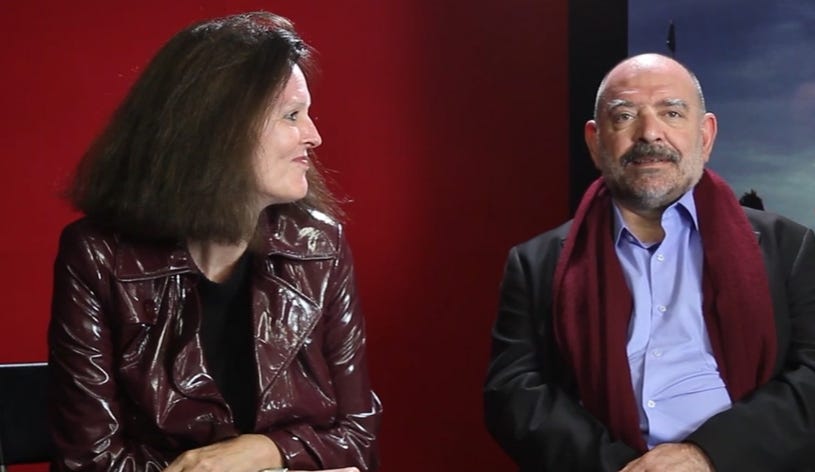
The fact that Slim, the son of a Shiite family, took on the armed rulers of his own denomination lent him credibility – but also put him in constant danger. “On Wednesday night, this voice of peaceful rebellion was silenced,” according to Reuters’ obituary. On the afternoon of February 3, 2021, Slim visited a friend in southern Lebanon, left in the evening, and did not answer his phone. His wife and friends were worried, and a search began until Slim was found in his car near the city of Nabatiyeh in the morning – with five bullets in his head. He was 59 years old.
Immediately after the first reports of the murder, Jawad Nasrallah, a son of the then Hezbollah secretary general Hassan Nasrallah, tweeted: “What some people see as a loss is in fact a gain and an unexpected blessing #NoRegrets.” He later deleted the tweet and explained that he was not referring to Lokman Slim.
On the first anniversary of Slim’s assassination on February 3, 2022, Monika Borgmann opened a new research center in Beirut: the Lokman Slim Foundation. It documents the countless political assassinations that plague not only Lebanon but the entire Middle East. “By political assassinations, we mean not only politicians, but also intellectuals, journalists, clergy, diplomats, doctors—in short, any unarmed person who is killed for expressing their opposition,” says Hana Jaber, director and co-founder of the Lokman Slim Foundation. Its namesake is one in a very long line of victims. But he is also the catalyst for the foundation’s creation. At the time of his murder, Slim was not only working on a large-scale project on prisons in the Middle East and North Africa, the MENA Prison Forum. He had also launched a program called “Who killed whom?”
Who killed Luqman Selim and who ordered the killing may remain unknown. Hezbollah continues to deny any involvement in the assassination.
This text was originally published on my German website and translated by me. German speakers can also listen to my interview with Monika Borgmann there.